Time once had to be watched through the night. Then one day, the clock began striking the hour on its own.
When people kept the time
Accurate time mattered in Joseon even when clocks were rare. Government offices had to begin work, guards had to change shifts, and the city gates had to close at night. For all of that to happen at the appointed hour, someone had to announce the time.
People measured time with the steady flow of water. These water clocks were known as nugak.
But even when the water clock kept time, a person still had to announce it. A timekeeper watched the water level day and night, then rang a bell or drum at the appointed hour.
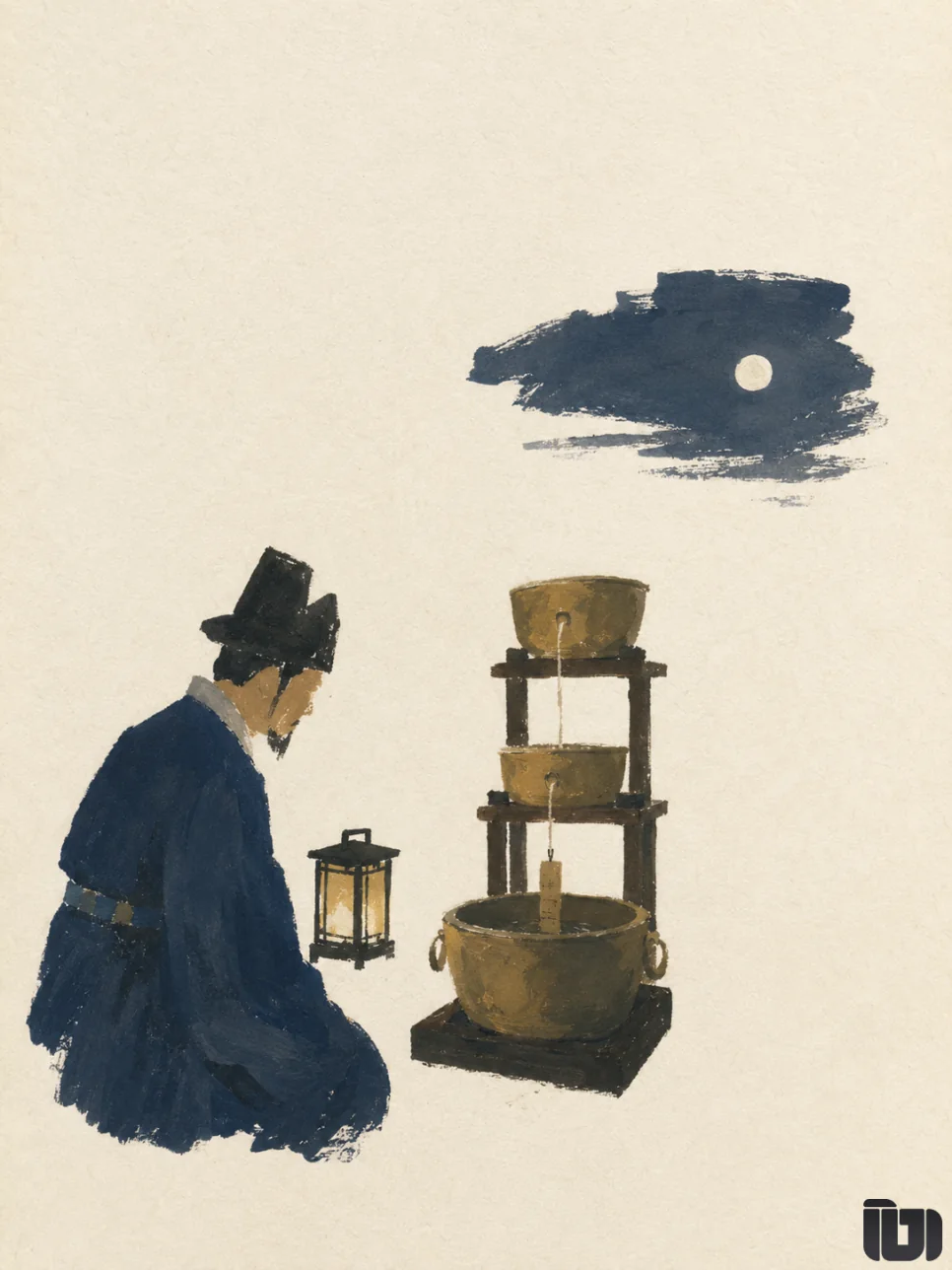
The limits of constant watch
If a timekeeper misread the water level or failed to ring the bell on time, the signal went out late. Some officials were punished for announcing the wrong hour.
The water clocks then in use were not precise enough either. Greater responsibility could not remove the limits of a system that depended on someone watching day and night.
King Sejong did not solve this problem by placing more responsibility on the timekeepers.
He ordered a new clock that would be more accurate and would not require a person to strike the bell. Jang Yeong-sil was among the technicians who took on the work.
A water clock that struck the hour by itself
But measuring time and making a machine ring a bell on its own were two completely different things.
The new water clock still measured time with a steady flow of water. What happened after the water reached a set level made it different.
As the water rose, a floating rod rose with it. When the rod reached a set height, a small ball dropped. That ball set other balls and levers in motion until the movement reached a wooden figure.
The wooden figure then struck the bell in place of a person. At night, drums and gongs sounded, and other figures appeared to show the hour.
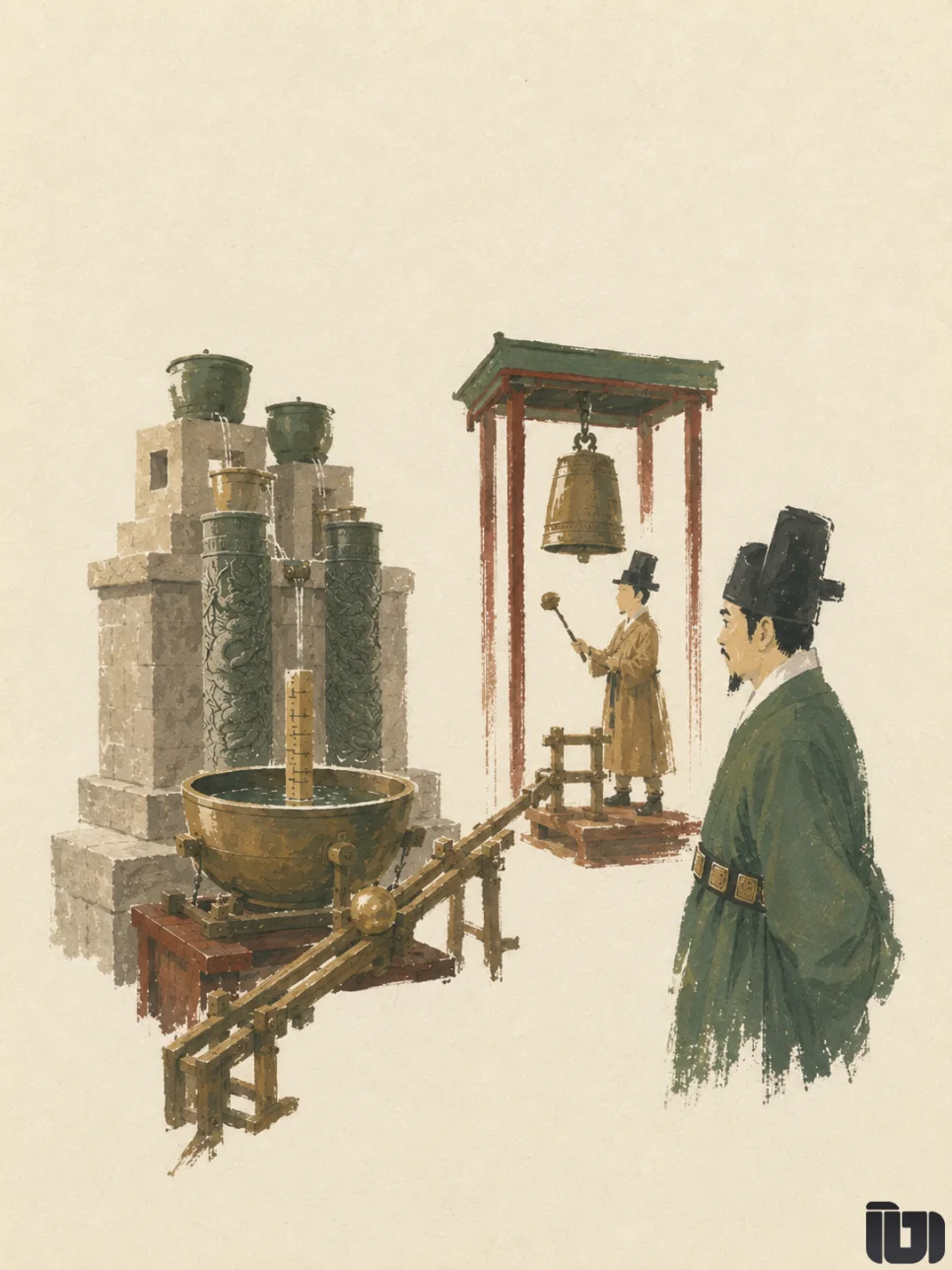
On July 1, 1434, this automatic water clock entered service as Joseon's new standard clock. It was called Jagyeongnu, meaning a water clock that struck the hour by itself.
Time carried beyond the palace walls
At the appointed hour, the mechanism set itself in motion. Water rose, balls dropped, and a wooden figure moved to strike the bell.
The time announced by Jagyeongnu did not remain inside the palace. Its signal was relayed to the great bell in the capital. People heard the bell and knew the time, while the city gates opened and closed at their appointed hours.
Before then, someone had to keep watch through the night. Once Jagyeongnu began working, time announced itself at the appointed hour.
Jagyeongnu changed more than the way time was measured. Government work, guard changes, and the opening and closing of the city gates could follow the same clock. Work no longer relied only on one person's memory and constant attention. It was tied to an appointed time.
Today, anyone can check the time in an instant. Yet an important appointment can still slip by when everything we need to do stays in our heads.
Put the work on your schedule, and you can return to it when the time comes.
ILJI TIME STORIES · 01