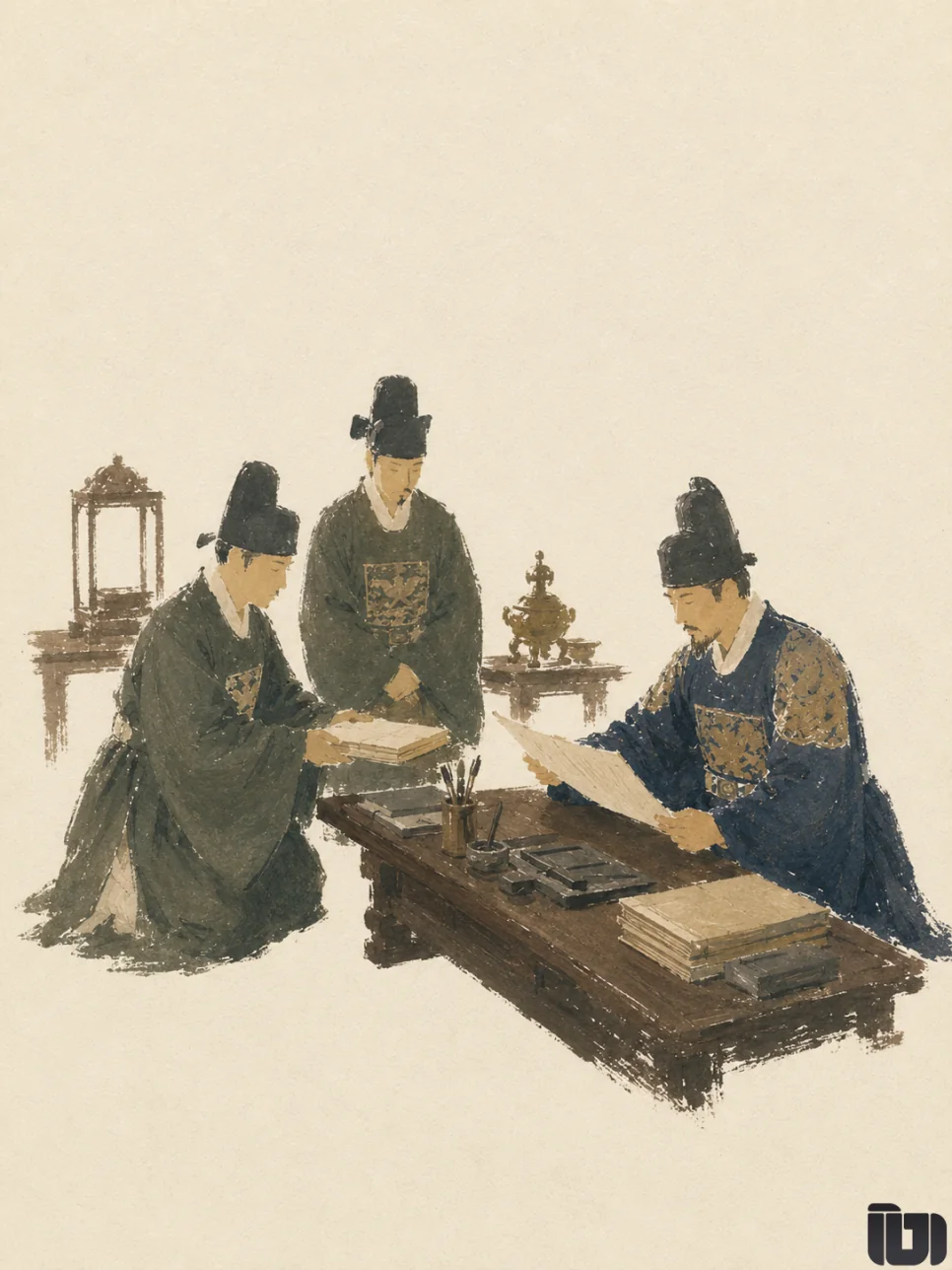
Every five days, a record of recent events was placed before King Jeongjo.
Records Delivered to the King Every Five Days
In 1783, King Jeongjo received organized records every few days.
Officials of Kyujanggak prepared the records. Kyujanggak was the royal library responsible for the king’s books and important documents.
Officials collected stories from the palace every day.
They wrote down what officials reported, what was discussed, and what the king decided.
One person wrote first, and the other person checked to make sure nothing was missed. The records compiled in this way were uploaded to King Jeongjo every five days.
King Jeongjo read the record and confirmed its contents.
Why Jeongjo Read the Records Himself
There was a reason why the king personally looked through so many records.
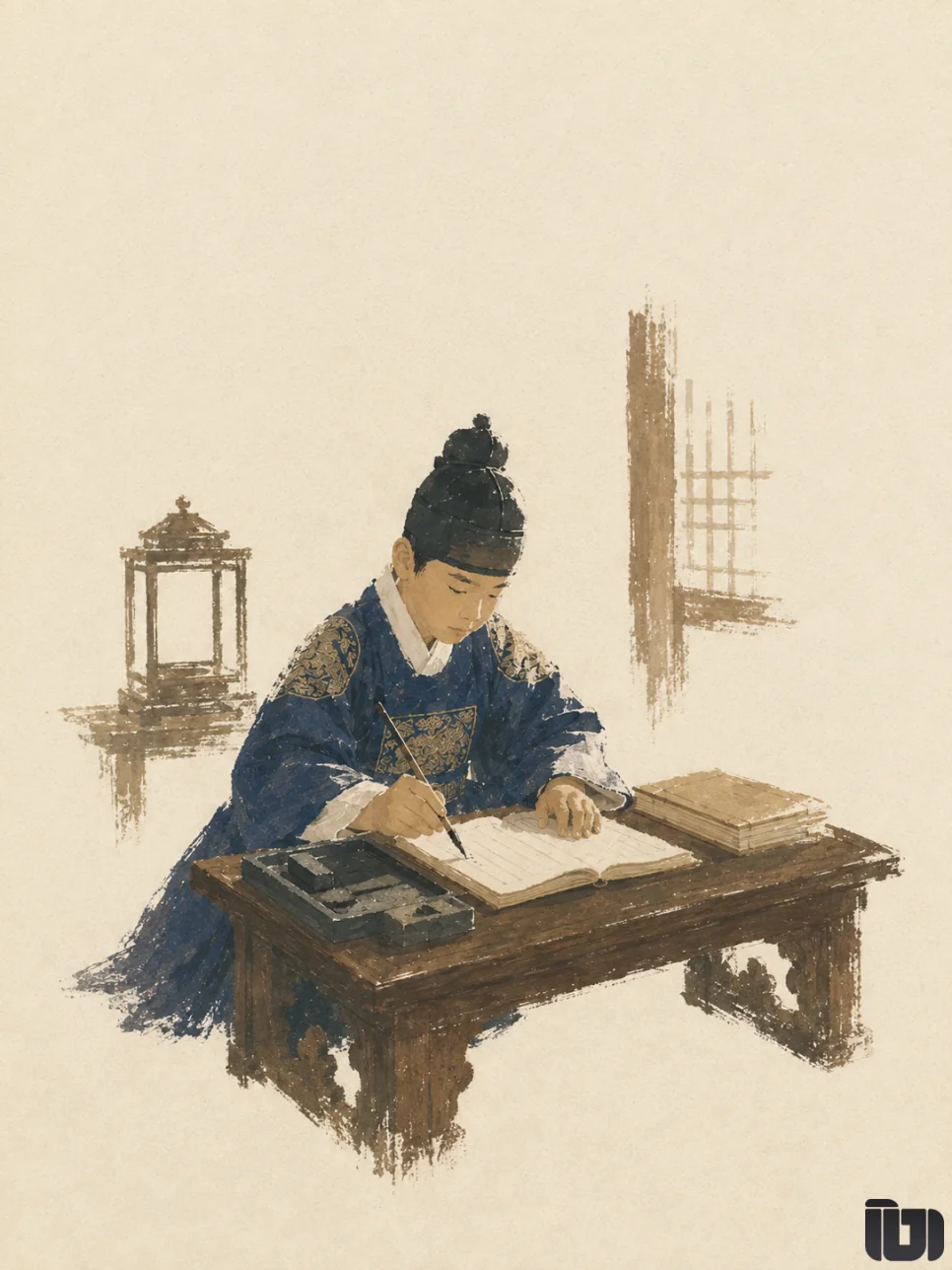
King Jeongjo kept a diary even before he became king.
Young King Jeongjo studied at a place called Jonhyeonggak and prepared to become king. He kept a diary detailing what he did and studied that day.
The purpose was not to let the day pass by, but to reexamine how one lived.
This diary was called ‘Jonhyeongak Diary’ after the name of the place where King Jeongjo stayed.
From a Personal Journal to a Record of State
In 1776, King Jeongjo became king.
From then on, what needs to be recorded has also changed.
His earlier journal covered his studies and daily life. As king, he needed a record of events across the country.
Many reports were posted every day. Stories shared with his subjects and decisions made by King Jeongjo continued to accumulate.
Jeongjo continued keeping records after becoming king, but the volume was too great for one person.
He had Kyujanggak officials collect and organize the work of each day.
King Jeongjo did not force records to be long.
Each event began with a clear heading followed by its details.
That structure made specific records easier to find later.
Diaries written by individuals have grown into national business records created by many people together.
These records were called Ilseongnok, meaning ‘Daily Records for Reflection.’
Using Past Records to Continue the Work
When King Jeongjo had to decide what to do next, he looked back at past records.
When subjects needed to find out how similar matters were handled in the past, they looked up Ilseongrok.
The records you left yesterday help your work today, and the records you left today help your next work.
Even after King Jeongjo passed away, the records did not stop. Successive kings also continued to leave behind daily tasks.
The record that started as one person's small diary became a book that connected the affairs of the country for a long time.
Our work is not all done in one day.
There are times when a request received today must be handled tomorrow. The promised date may change, or you may stop what you are doing and start again a few days later.
If you have a short record at that time, you can quickly see how far you have come.
You don't have to remember from scratch who you talked to and what to do next.
Before you finish your work today, leave just one line of work to do tomorrow.
Tomorrow can begin with a line written down today.
ILJI TIME STORIES · 02