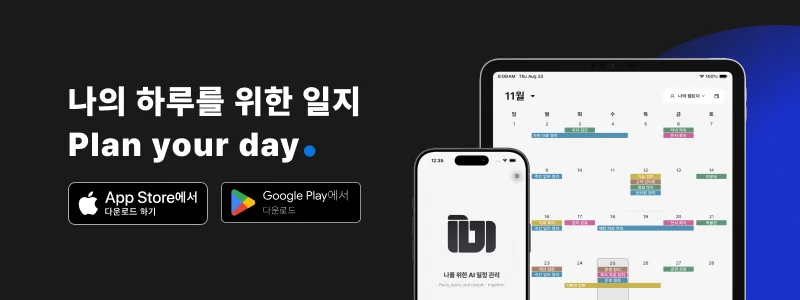
Before the workload grows, a personal calendar may be enough.
You remember the appointments and add any necessary details to a note.
As soon as another person joins the work, what you need to track changes.
Who owns the schedule? Is other work booked at the same time? What changed, and how far has the work progressed?
The gap between a personal schedule and shared team work is larger than it first appears.

What a Personal Calendar Cannot Show About a Team
A personal calendar is quick and familiar. Once several people work together, however, messages and verbal updates multiply.
Every schedule change needs another message. Checking who is assigned becomes repetitive too.
Starting with a heavyweight company system can also be a burden. It introduces settings and processes that were unnecessary when the work belonged to one person.
ILJI starts with an individual's calendar and expands to a team when needed.
Seeing Team Work Beside Your Own Schedule
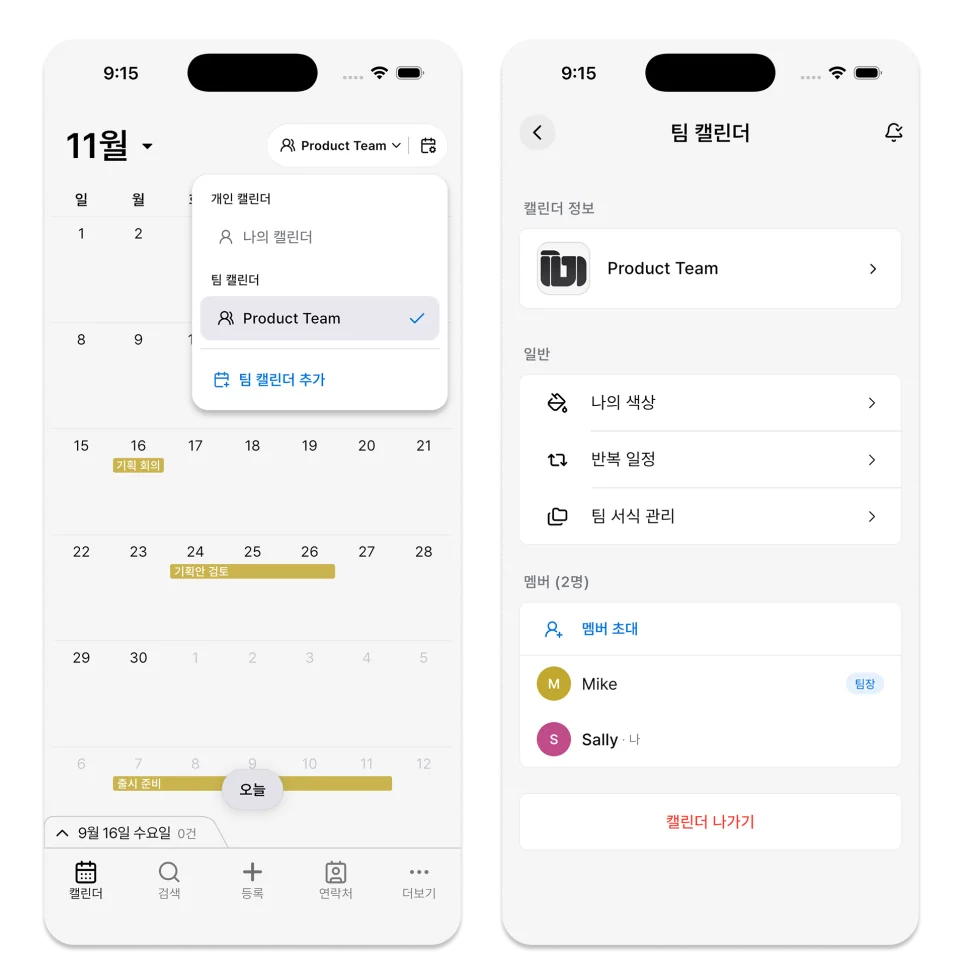
Keep personal and work schedules in your own calendar. Move work that needs shared management to a team calendar, invite members, and assign the people responsible or participating.
Members can see the same team schedules and identify the work assigned to them. Showing the relevant team calendar beside a personal calendar also removes the need to compare two separate views.
The important thing is that not all of your personal schedules are visible to the team.
Schedules managed personally and work managed by the team stay in separate calendars.
Making Responsibility Visible Matters More Than Sharing Everything
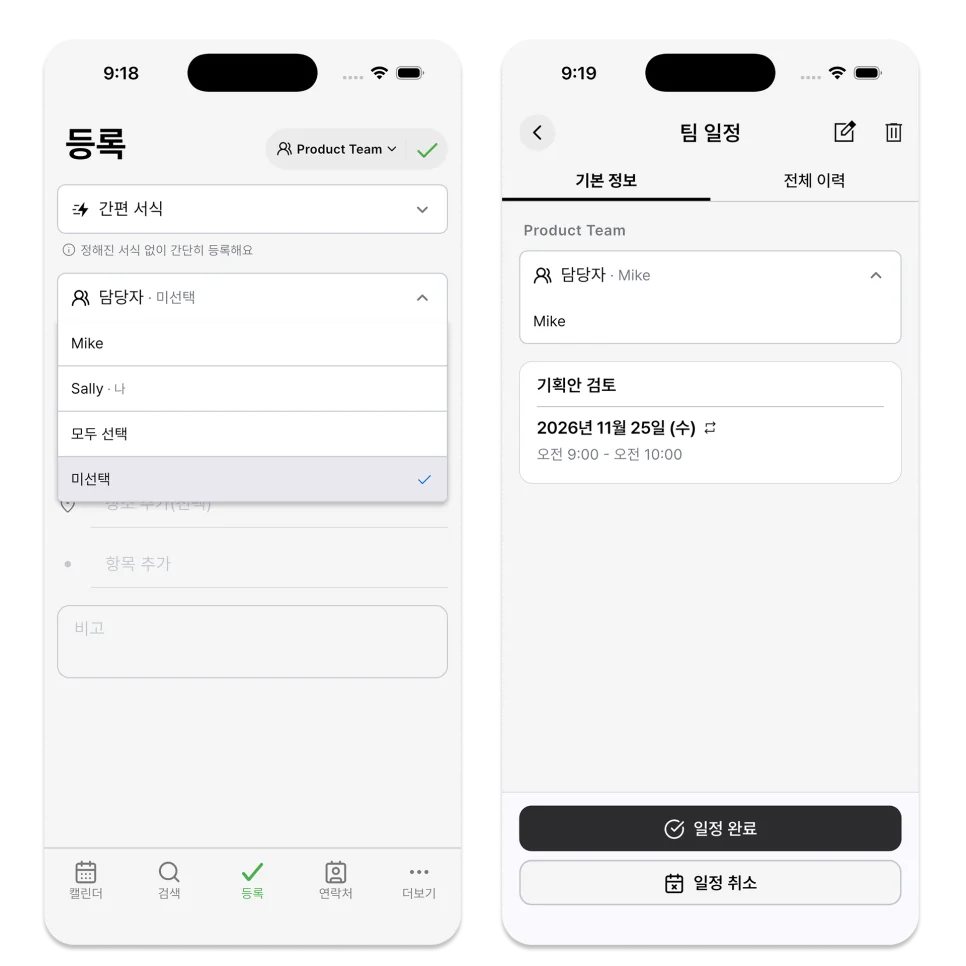
The purpose of the team calendar is not to show all information at once. The goal is to view tasks that need to be known together by the same standards and make it clear who is in charge.
Once an assignee is connected to the schedule, handoffs no longer end in a single messenger thread. The date, details, and progress remain together, and changes stay visible in the schedule’s flow.
Joining a team does not replace the habits that worked alone. You still view the schedule, record the necessary details, and organize the completed work.
Team Management That Starts with One Person
A useful team tool does not have to begin with a large organization.
You may manage customers and schedules alone today, then share the work with one colleague tomorrow. ILJI lets the same habit expand from a personal calendar to team calendars and assignees.
If you are switching between tools for personal schedules and team work, try managing both from the calendars where the work already begins.