A calendar may show only three visits, while travel, delays, and field notes already fill the day.
Fix the appointment times first, then add the activities required between them. Confirm real travel times for the locations and expected traffic.

- 9:30–10:00 Review materials and travel to the first location
- 10:00–11:00 First consultation
- 11:00–11:15 Capture the discussion and next action
- 11:15–12:00 Travel to the second location
- 12:00–1:00 Site inspection
- 1:00–2:00 Lunch, travel, and buffer
- 3:00–4:00 Follow-up meeting
This view makes it easier to decide whether a new appointment fits between 1:00 and 3:00. When the next trip depends on the previous visit ending, filling every gap cannot be the goal.
Field Notes Also Take Work Time
The 5 to 15 minutes after a visit are often the best time to capture customer requests, results, and the next appointment. Leave that time out and several visits must be reconstructed from memory after work.
The Order Matters Even With the Same Three Visits
When locations are far apart, the visit order changes the travel burden. Check existing locations and estimated travel in a map before accepting a new booking. ILJI does not calculate routes or optimize the sequence automatically, so the team decides what is realistic.
Buffer Time Is Not Wasted Time
An open hour protects the next promise when earlier work runs long, and becomes time for notes or customer calls when work finishes early. Adjust the buffer using delays observed over the previous weeks.
Capture One Cause of Delay at Day’s End
Leave a short note such as “customer discussion ran long,” “travel exceeded estimate,” or “late start while checking supplies.” A repeated reason is evidence for increasing the default duration or leaving earlier for a certain area.
Evaluate a New Request From Its Finish Time
Even if 1:00 p.m. looks open, check when the prior visit ends, travel to the new location, and whether wrap-up time remains before the 3:00 appointment. A one-hour visit may appear to fit until customer discussion and travel are included.
Use Repeated Delays to Improve the Next Schedule
If the first consultation often runs 20 minutes long, add wrap-up and travel time after it. If parking in one area causes delays, leave earlier only on days that include that area. One isolated delay does not require lengthening every visit.
Comparing Planned and Actual Work Time in ILJI
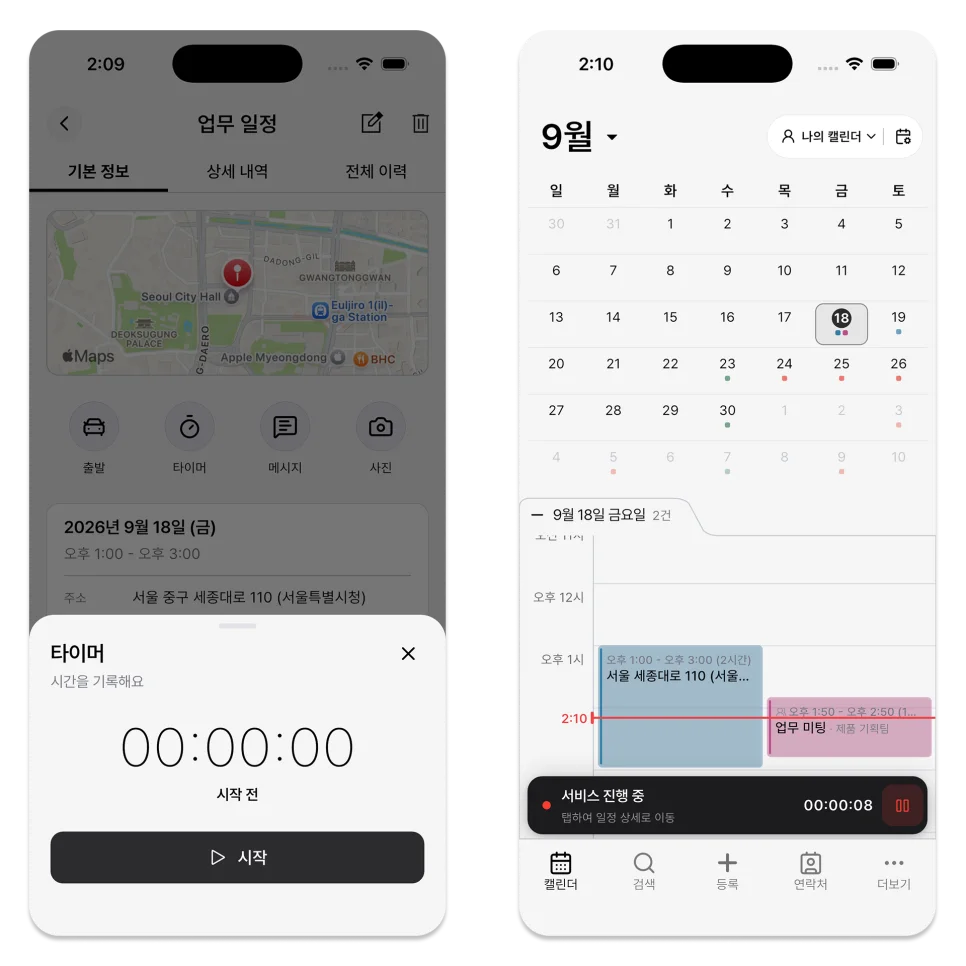
Keep the planned visit time in the calendar, and for work schedules that use the service timer, measure and save actual service time. This does not optimize travel routes; it gives the team planned and actual duration to compare when adjusting the next schedule.
A schedule is not better because every gap is filled. It is better when the team can still keep its promises after a change.